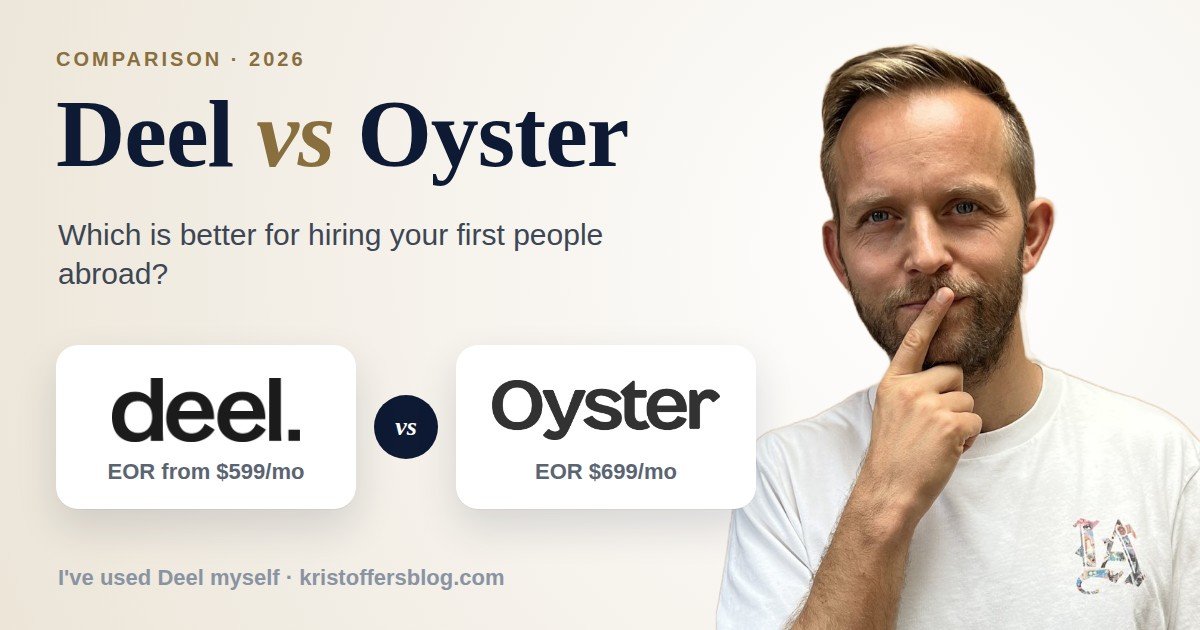
Deel vs Oyster (2026): Which Is Better for Founders Hiring Their First People Abroad?

This post contains affiliate links. I may earn a commission at no extra cost to you.
You’ve found someone great. They live in another country, and you need to pay them properly, legally and on time. If you’ve started researching, two names keep coming up: Deel and Oyster.
Both are good companies. Both help you hire contractors and full-time employees abroad without opening a company in every country. But they’re built for slightly different founders, and the right choice depends on who you’re hiring, where, and what you need next.
I’m Danish, I built my company in the US, and I’ve used Deel myself, including for my own O-1A visa. So here’s the plain-English comparison I’d give a friend who’s about to make their first hire abroad.
The short answer
- Choose Deel if you’re hiring a mix of contractors and employees across several countries, your contractors need flexible ways to get paid, or you might need visa support for yourself or your team.
- Choose Oyster if you’re building a remote-first team and care most about a strong employee experience and benefits, from a mission-driven company (Oyster is a Certified B Corp).
My verdict for founders hiring their first people abroad: Deel, because it covers every stage, from your first contractor to your first employee to a visa, in one place.
First: EOR, Global Payroll or Contractor Management?
Before comparing prices, figure out which service you actually need. These are three different things, and mixing them up is how founders overpay or take on legal risk.
Contractor Management is for independent contractors, freelancers who invoice you. The platform handles the contract, invoices and payments in their currency. You’re still responsible for classifying them correctly as contractors. Both Deel and Oyster offer extra protection here for a higher fee (more on that below).
Employer of Record (EOR) is for when you want a full-time employee in a country where you don’t have a company. The EOR provider becomes the legal employer in that country. It handles the employment contract, payroll, taxes, benefits and local compliance, while you manage the person’s day-to-day work.
Global Payroll is for when you already have your own legal entity in a country. The provider runs payroll through your entity: calculations, filings and contributions. You stay the legal employer.
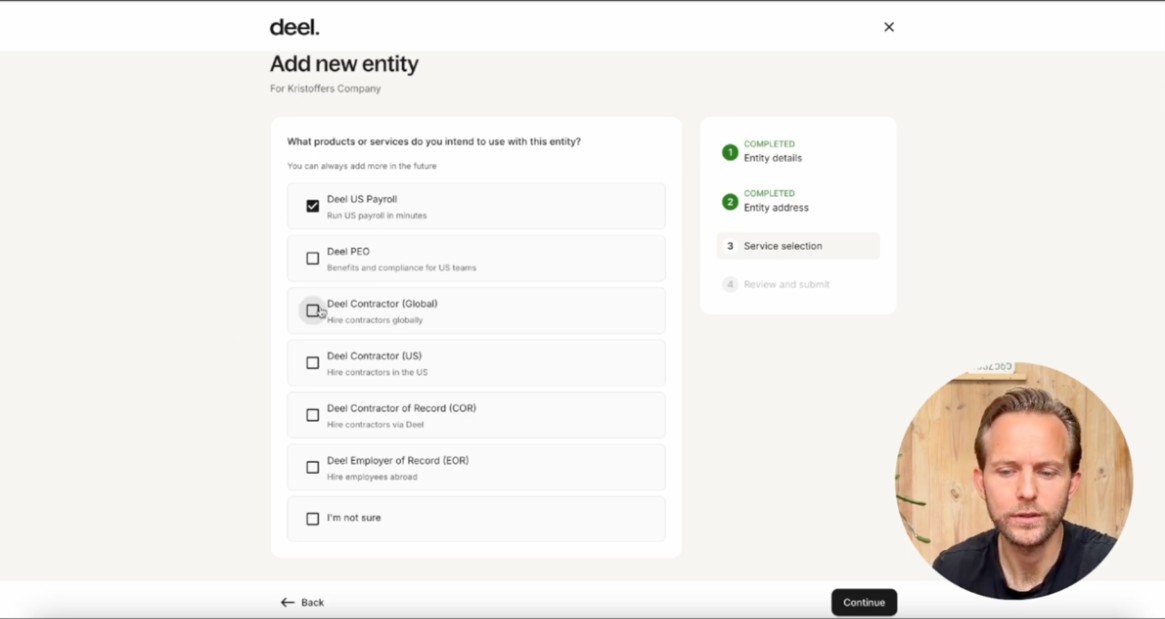
A simple rule:
- Hiring freelancers? → Contractor Management
- Hiring an employee where you have no company? → EOR
- Hiring through your own local company? → Global Payroll
Not sure if someone should be a contractor or an employee? I wrote a full guide: EOR vs. Contractor: when to use each.
Deel vs Oyster side by side
Prices are list prices from each company’s website as of October 2026 (Deel pricing, Oyster pricing). They can change, and both offer discounts, so check before you sign.
| Deel | Oyster | |
|---|---|---|
| EOR (employees) | From $599 per employee/month | $699 per employee/month (annual discounts available) |
| EOR coverage | 130+ countries | 120+ countries, through owned entities and vetted partners |
| Contractor Management | $49 per contractor/month | $29 per contractor/month, first month free |
| Misclassification protection | Contractor of Record: $325 per contractor/month (Deel holds the contract) | Oyster Shell add-on: +$49 per contractor/month (covers costs up to $50,000 per claim) |
| Global Payroll (your own entity) | 150+ countries | Available, pricing on request |
| How contractors get paid | 10+ withdrawal options incl. bank, PayPal, Wise, Revolut, Payoneer, Deel Card and crypto | Payments in 120+ currencies |
| Visas and work permits | Deel Mobility: work permits in 75 countries | Visa sponsorship add-on in 60+ countries |
| Extras | HR, IT/equipment in 130+ countries, US PEO, recruiting, 120+ integrations | Prebuilt benefits packages, equity support, Certified B Corp |
| Best known for | All-in-one breadth, payout options, 24/7 support | Focus on distributed teams, benefits, mission-driven company |
How they compare on 6 criteria
Price is only one part of the decision. These are the six things I’d check before choosing, with what each company offers. Where I haven’t tested something myself, I say so.
| Criteria | Deel | Oyster |
|---|---|---|
| 1. Pricing structure | Flat monthly fee per person: from $599 (EOR), $49 (contractors), $325 (contractor of record) | Flat monthly fee per person: $699 (EOR, with annual discounts), $29 (contractors, first month free) |
| 2. Country coverage | EOR in 130+ countries, global payroll in 150+ | EOR in 120+ countries through owned entities and vetted partners |
| 3. Compliance support | Compliance Hub that alerts you about new rules; Deel says it has in-house experts in 150+ countries | In-house legal team that works with local employment and IP law experts; Oyster Shell for contractor misclassification cover |
| 4. Customer support | Deel says support is available 24/7 (chat, email, phone and more) | Oyster says it replies within 24 hours and resolves issues within 72 hours; dedicated Hiring Success Manager during onboarding |
| 5. Platform and ease of use | I use Deel myself. One dashboard for contractors, employees, payroll and HR (more in “My take” below) | I haven’t used Oyster myself. On G2 it was rated Easiest Admin for mid-market (Summer 2026) |
| 6. Extras | Immigration support in 75 countries, HR, IT and PEO tools, 120+ integrations, 10+ payout options including crypto | Visa support in 60+ countries (add-on), benefits focus, certified B Corp |
How to read this: if one criterion matters most to you, let it decide. Need 24/7 support or visa help in many countries? That points to Deel. Paying mostly contractors on a tight budget? That points to Oyster.
Pros and cons
Deel
- Pro: lower starting EOR price ($599 vs $699 per month)
- Pro: everything in one place: contractors, EOR, global payroll, HR and immigration
- Pro: many payout options for your team, including crypto
- Con: contractor plan costs more than Oyster’s ($49 vs $29 per month)
- Con: so many features that a very small team won’t use most of them
Oyster
- Pro: cheaper for contractors, with the first month free
- Pro: optional misclassification cover (Oyster Shell)
- Pro: certified B Corp, if company values matter to you
- Con: higher starting EOR price, unless you commit to an annual plan
- Con: fewer extras: visa support is an add-on and covers fewer countries
Where Oyster is the better pick
Oyster is a strong product, and for some teams it’s the smarter choice:
- Contractor-heavy teams on a budget. At $29 per contractor per month (with the first month free), Oyster costs less than Deel’s $49 if most of your team is freelancers.
- Teams that care about values. Oyster is a certified B Corp, which matters to some founders and to some candidates.
- Founders who want extra cover on contractors. Oyster Shell is an add-on ($49 per contractor per month) that covers up to $50K per misclassification claim.
- Companies that can commit for a year. Oyster offers discounts on annual EOR plans, which can close the gap with Deel’s lower monthly EOR price.
If you only plan to pay a handful of freelancers and never hire full-time employees abroad, Oyster is worth a real look.
What it costs: a simple example
Say you run a small US startup. You want one full-time developer in Portugal through EOR, plus three freelancers (a designer, a writer and a video editor) paid as contractors. Using the starting list prices above:
- Deel: $599 (EOR) + 3 × $49 (contractors) = $746 per month, about $8,952 a year.
- Oyster: $699 (EOR) + 3 × $29 (contractors) = $786 per month, about $9,432 a year, before any annual EOR discount and with the first contractor month free.
For this mix the two are close: about $40 a month apart. Change the mix and the answer changes. With 10 contractors and no employees, Oyster costs $290 a month and Deel $490, so Oyster saves you $200 a month. With more full-time employees, Deel pulls ahead by $100 per employee per month.
Two things to keep in mind. First, these are platform fees only. The employee’s salary, employer taxes and mandatory benefits come on top, and those are set by the country, not by the platform. Second, prices change and can depend on the country, so get a quote from both before you sign.
Which one fits you?
You’re hiring 1–3 freelancers in different countries. Oyster’s contractor plan costs less per person ($29 vs $49) and the first month is free. Deel costs more but gives contractors far more ways to get paid, which matters in countries where bank transfers are slow or expensive. Pick Oyster if lowest cost is the priority; pick Deel if your contractors need flexible payouts or you plan to grow.
You’re worried about misclassification. The two handle it differently. Deel’s Contractor of Record means Deel holds the contract and takes on the classification risk. Oyster Shell is insurance-style cover for misclassification costs, up to a set limit, if you meet its eligibility rules. If you want the risk off your plate entirely, Deel’s option goes further; if you want lighter, cheaper cover, look at Oyster Shell.
You’re hiring your first full-time employee abroad. Deel starts around $599 per month, Oyster at $699 (less on annual plans). Both cover 120+ countries for EOR. Oyster is known for strong benefits packages; Deel adds HR, equipment and immigration under the same roof.
You or your hire need a visa. Both offer visa support as an extra. Deel’s mobility team covers work permits in 75 countries, and it’s the one I’ve used myself (see below).
How to hire your first person abroad (step by step)
This is the order I’d follow, whichever platform you pick:
- Decide: contractor or employee. If the person works only for you, full-time, with set hours and your tools, they should probably be an employee. If you’re unsure, go back to the simple rule above.
- Check the country. Make sure the platform supports EOR (or payroll) there, and ask how long onboarding takes in that country.
- Get a full quote. Ask for the total monthly cost: platform fee plus salary, employer taxes and mandatory benefits.
- Agree on the offer. Salary, start date, notice period and holidays. The platform writes a local contract that follows the country’s rules.
- Onboard. Your new hire signs the contract and uploads their documents, and the platform handles the local registration.
- Run payroll every month. You pay one invoice, and the platform pays the person and the local taxes.
I walk through this exact flow inside Deel, screen by screen, in this tutorial:
Checklist before you sign
- Is your hire’s country supported? Does the platform use its own entity there or a partner?
- What is the full monthly cost per person, not just the platform fee?
- Is there a security deposit? Ask up front, since some EOR plans need one.
- What is the notice period if you end the contract, and are there exit fees?
- How does the worker get paid: which currency, which method and how fast?
- Who do you talk to when something goes wrong, and how fast do they answer?
- If visas matter to you, does the platform help, and in which countries?
Mistakes I see founders make
- Calling a full-time worker a contractor to save money. It’s cheaper until it isn’t. Misclassification can mean back taxes and penalties in the worker’s country.
- Comparing only the platform fee. In most countries the employer taxes and benefits cost much more than the $599 or $699 platform fee.
- Choosing a tool for one hire. Think about where you’ll be in a year. If you might hire in five countries, check coverage for all five now.
- Starting too late. EOR onboarding can take anywhere from a few days to a few weeks depending on the country. Start before you need the person.
My take
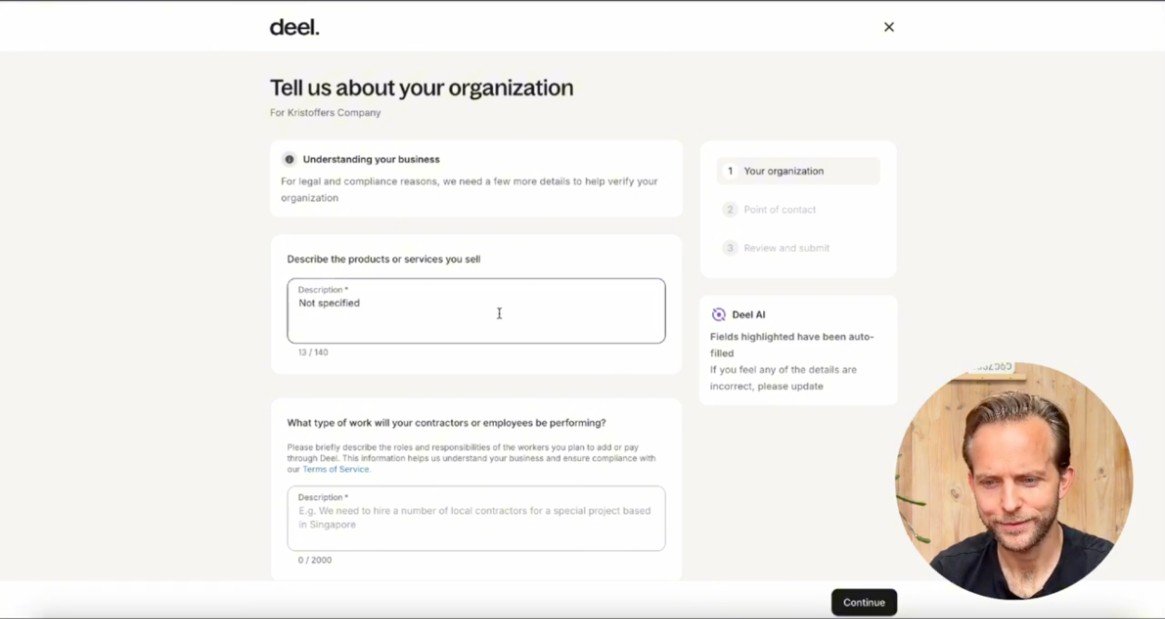
I used Deel for my own O-1A visa to the US, so I’ve seen how it works from the inside, not just from a pricing page. I wrote about the whole process here: How I got my O-1A visa using Deel. I’ve also made several tutorials walking through Deel, from paying international contractors to hiring through EOR.
Oyster is a solid, thoughtful company, especially if your priority is a great experience for remote employees. But for most founders hiring their first people abroad, things change fast: a contractor this month, an employee next quarter, maybe a visa after that. Deel handles all of it in one place, and that’s why I’d start there.
Related reading
- Deel vs Remote (2026): Which One Is Better for Global Hiring?
- EOR vs Contractor: When to Use Each
- Deel Review 2026: How I Got My O-1A Visa to the U.S.
FAQ
How long does it take to hire someone through EOR?
It depends on the country. Some hires are ready in a few days, others take a couple of weeks because of local paperwork. Ask the platform for the timeline in your hire’s country.
Can I switch from Oyster to Deel later, or the other way around?
Yes, but it means new contracts for your people and possibly notice periods, so it’s easier to pick well from the start.
Is Deel or Oyster cheaper?
For contractors, Oyster’s list price is lower ($29 vs $49 per month). For EOR, Deel’s starting price is lower ($599 vs $699 per month), though Oyster offers annual discounts. Your real cost depends on the country and plan.
Do I need EOR for a freelancer?
No. Freelancers who invoice you only need contractor management. EOR is for full-time employees in countries where you don’t have a company.
Can I start with contractors and move them to EOR later?
Yes, both platforms support contractors and EOR employees, so you can switch someone when they go full-time.
Can Deel or Oyster help with visas?
Both offer visa support as an add-on. Deel covers work permits in 75 countries; Oyster lists 60+.
Prices and country counts are from deel.com and oysterhr.com as of October 2026 and may change. This isn’t legal or tax advice; check the rules for the countries you hire in.